
Automotive tinting, also known as window tinting, is a popular modification for vehicles that offers a range of benefits, including privacy, UV protection, and temperature control. But have you ever wondered how this process works?
Here’s a breakdown of the steps involved in automotive tinting:
Surface Preparation for Automotive Tinting
Before applying the tint film, the windows need to be thoroughly cleaned.
Any dust, dirt, or residue on the glass can affect the tint’s adherence. Professionals use a cleaning solution and razor blades to ensure the windows are impeccably clean and smooth.
Film Cutting
Tint films are typically manufactured in rolls. Using specialized tools, professionals cut the film according to the specific dimensions of each window. Precise cutting ensures that the tint fits perfectly, covering the entire window without overlapping or leaving gaps.
Application of Adhesive
A special adhesive, usually water-activated, is applied to the film. This adhesive allows the tint to stick to the window surface.
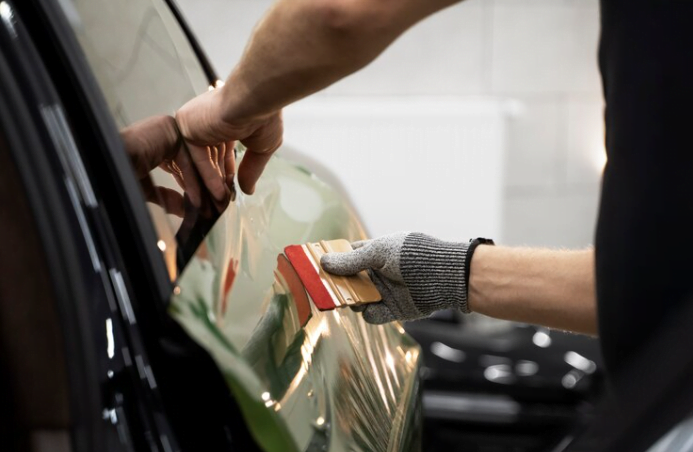
Careful application is crucial to prevent air bubbles or wrinkles. Professionals use techniques like squeegeeing to ensure a smooth and even application.
Fitting and Shaping
Tinting involves shaping the film to fit the contours of the window. Professionals use heat guns to soften the film, making it pliable.
This enables them to mold the tint to the shape of the window perfectly. The heat also activates the adhesive, ensuring a strong bond between the film and the glass.
Drying and Curing
After the film is applied and shaped, it needs time to dry and cure. During this period, the adhesive bonds securely with the glass, forming a tight seal. The curing process ensures the tint becomes durable and resistant to peeling, cracking, or discoloration over time.
Quality Inspection
Once the tint is applied and dried, professionals conduct a thorough inspection. They check for any imperfections, bubbles, or debris trapped beneath the film. If necessary, they might make additional adjustments to ensure a flawless finish.
It’s important to note that automotive tinting is a skill that requires precision and expertise. While DIY tinting kits are available, professional installation ensures a higher quality result, free from common issues like air bubbles or creases. Additionally, professional installations often come with warranties, providing peace of mind and assurance of the tint’s longevity and performance.
In summary, automotive tinting involves a meticulous process of cleaning, cutting, applying adhesive, shaping, drying, and inspecting. When done professionally, it not only enhances the appearance of your vehicle but also provides practical benefits such as privacy, UV protection, and improved temperature control, making your driving experience safer and more comfortable.